First Source To Open
This block uses Deer Enclosure, Wang Wei, Tang poem as the anchor, with "空山不見人,但聞人語響。返景入深林,復照青苔上。" kept in front of the explanation.
Absence Is Not Empty Decoration: Deer Enclosure begins with an empty mountain where no person is seen, yet human voices are heard. Returning light enters the deep forest and shines on moss. This recalled poem makes absence active. The guide should therefore ask what is unseen, what is heard, and where light moves before calling the poem tranquil.
Parting Is Quiet But Not Blank: The Parting poem gives another Wang Wei mode. After seeing a friend off, the speaker closes a brushwood gate at dusk and asks about spring grass next year. The recalled material is small, but the question carries feeling. Quietness here is not lack of emotion; it is emotion held in a restrained scene.
Mountain Dwelling Has Movement: Mountain Dwelling in Autumn Evening prevents the guide from freezing Wang Wei into still landscape. After new rain, moon shines among pines, clear spring flows over stones, bamboo noise announces returning washerwomen, and lotus movement shows fishing boats. The scene is quiet because its movements are measured, not because nothing happens.
Reading Wang Wei Through Perception: The recalled materials suggest a practical method: track perception before theme. Sight, sound, light, closure, question, rain, spring, bamboo, and lotus all create the reading. If English readers begin with Buddhism or nature, they may miss how carefully the poem places attention in a sequence of sensory changes.
How The Work Changes The Author Label
How To Compare Translations: Translations of Wang Wei often add serenity. The safer comparison asks whether the English keeps absence and human voice together, or whether it preserves the small question after farewell. For Mountain Dwelling, check whether the translation keeps movement in the scene rather than turning it into a static painting.
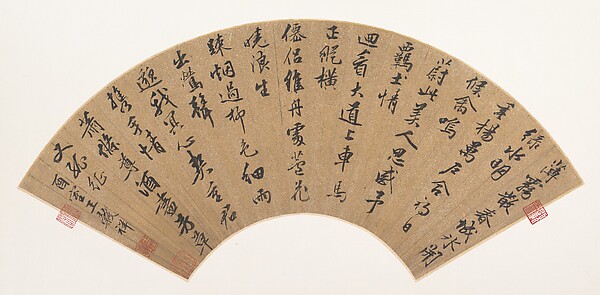
Image And Next Reading: The landscape album leaf fits as an illustrative surface because this guide is about viewing, sound, and restrained poetic scene. It is not evidence for the poems' locations. The next useful step is to read a Tang poem aloud and notice how line breaks control perception.
Quietness Has Evidence: The recalled Wang Wei poems make quietness checkable. Deer Enclosure has a voice inside absence; Parting has a closed gate and a future spring question; Mountain Dwelling has rain, moon, spring water, bamboo noise, and boats. The guide therefore avoids using quiet as a vague adjective. It asks which sensory detail creates quiet and which movement keeps it alive.
A Better Next Step Than General Poetry Advice: The useful next reading is not an unpublished general workflow but the published Wang Wei poem pages themselves. Those pages let the reader test this guide against complete texts. Moving from source guide to Deer Enclosure, Parting, and Mountain Dwelling keeps the reading path inside verified, published pages with Chinese, pinyin, translation, and page-specific notes.
Keep the term set visible here: kong shan, ren yu, fan jing. The reading changes if one of these terms is translated too smoothly.
The reading should end in one practical move: Read Deer Enclosure beside a Tang poem aloud guide to hear how quiet is built.