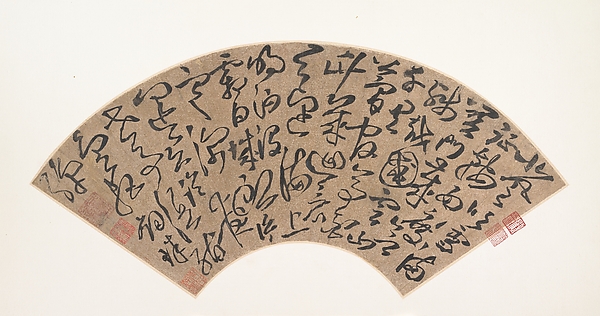
The Poem Before Paraphrase
This block uses Deer Enclosure, Wang Wei, Tang poem as the anchor, with "空山不見人,但聞人語響。返景入深林,復照青苔上。" kept in front of the explanation.
Full Poem: The page uses all four lines because Deer Enclosure depends on a precise sequence. First the eye does not see people. Then the ear hears voices. Then light enters the deep forest. Finally it rests on green moss. The poem's quietness is not a mood added afterward; it is built by this order of perception.
Empty Mountain: Kong shan, empty mountain, should not be read as absolute emptiness. The next phrase immediately complicates it: no person is seen. The mountain is empty to sight, not necessarily empty of presence. This distinction lets the poem hold absence and trace together without explaining either one too much.
Human Voices: Dan wen ren yu xiang says only human voices are heard echoing. The people remain unseen, but their sound reaches the listener. This makes the poem social in a minimal way. It is not a landscape without humanity. It is a landscape where human presence arrives as resonance rather than visible form.
Images, Sound, And Emotional Turn
Returning Light: Fan jing is often discussed because the phrase can mean returning or reflected light. The page translates it as returning light to keep the direction visible without overexplaining it. Light comes back into the scene rather than flooding it. That small return prepares the final moss image.
Deep Forest: Ru shen lin sends the light into the deep forest. The line keeps depth and entry together. The poem does not describe a wide panorama. It narrows attention: light moves into a shaded place. This restraint is why the final illumination feels delicate instead of grand.
Green Moss: Fu zhao qing tai shang ends on green moss. The object is small, low, and easily missed. After the unseen people and the echoing voices, the poem gives the eye a surface that receives light. The final line is not a conclusion in argument form; it is a precise landing place for attention.
Keep the term set visible here: kong shan, ren yu xiang, fan jing. The reading changes if one of these terms is translated too smoothly.
Translation Choices To Keep Visible
Sound And Light: The poem pairs hearing and seeing without making them symmetrical. Sight begins with absence and ends with moss. Hearing appears as echo. Light returns into depth. A careful reading should not turn the poem into simple peace. Its quietness comes from partial perception and the discipline of not filling the scene with explanation.
Wang Wei's Deer Enclosure Translation Limit: A responsible translation should preserve the sparseness. Adding too much feeling can damage the poem because the source text trusts image order. Empty mountain, unseen people, heard voices, returning light, deep forest, and green moss should remain the main evidence. The English should explain after the poem, not inside every line.
Wang Wei's Deer Enclosure Reading Payoff: This page differs from Spring View because Wang Wei's poem carries little explicit historical pressure and works through sparse perception. It differs from Quiet Night Thoughts because the speaker's emotion is less directly named. The article gives readers a source-based way to read Deer Enclosure as a poem of sound, light, absence, and attention.
The reading should end in one practical move: Compare this page with Du Fu's Spring View and Li Bai's Quiet Night Thoughts before using the poem as a generic nature quote.