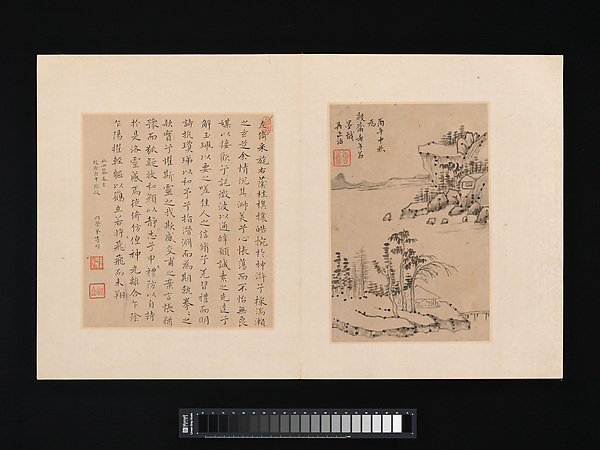
The Poem Before Paraphrase
This block uses Mountain Dwelling In Autumn Evening, Wang Wei, 山居秋暝 as the anchor, with "空山新雨後,天氣晚來秋。明月松間照,清泉石上流。竹喧歸浣女,..." kept in front of the explanation.
Full Text: The page uses all eight lines because the poem is built from layers. Empty mountain and new rain open the space. Moon and spring water clarify it. Human sound and moving lotus bring life back in. The final couplet turns the scene into a decision to remain.
Empty Mountain After Rain: Kong shan does not mean a dead landscape. After new rain, the mountain feels cleared. The emptiness is a condition for attention. Evening weather brings autumn, so the poem begins in freshness and seasonal change rather than blank withdrawal.
Moon And Spring Water: The moon shines among pines, and clear spring water runs over stones. These lines are balanced by light and movement. The scene is quiet, but not still. Wang Wei's mountain dwelling depends on subtle activity within calm.
Human Sounds: Bamboo rustles as washerwomen return. This line prevents the poem from becoming pure scenery. The people are not directly described at length, but their return gives the mountain an ordinary rhythm. The reclusive setting still has community and labor.
Images, Sound, And Emotional Turn
Lotus And Boats: The lotus moves as fishing boats pass down. The human action is seen indirectly through vegetation. That is typical of the poem's restraint: the landscape registers people without turning into narrative. Motion enters quietly.
Choosing To Stay: The final lines say spring fragrance may fade as it will; the noble traveler can remain. This is not a complaint that spring is gone. The autumn mountain is sufficient. The poem's argument is that a place can become more desirable after seasonal brightness has passed.
Quiet Does Not Mean Empty: The poem's quiet is made from layered activity. Rain has just passed, moonlight enters the pines, water flows over stone, bamboo records people returning, and lotus moves with boats. The page therefore avoids reading kong shan as isolation alone. The mountain is spacious enough to hear small movements.
Wang Wei's mountain dwelling Translation Limit: This working translation keeps wang sun as noble traveler rather than forcing one fixed identity. The phrase carries literary resonance, but in this page the important point is the right to remain in the autumn mountain even after spring's flowers and fragrance have gone.
Keep the term set visible here: kong shan, xin yu, ming yue. The reading changes if one of these terms is translated too smoothly.
Translation Choices To Keep Visible
Wang Wei's mountain dwelling Reading Payoff: This page differs from Wang Wei's Deer Enclosure because Mountain Dwelling includes human return and a final decision to stay, while Deer Enclosure works through perception and hidden sound. It differs from Jia Dao's hermit poem because Wang Wei's reclusion is inhabited rather than sought and missed. The article gives readers a source-based way to read the mountain as livable calm, not empty escape.
Wang Wei's mountain dwelling Source Checkpoint: Let the poem move line by line before paraphrase begins: Mountain Dwelling In Autumn Evening, Wang Wei, 山居秋暝, opening with "空山新雨後,天氣晚來秋。明月松間照,清泉石上流。竹喧歸浣...". Keep kong shan beside the Chinese wording before accepting the readable English. On this page the source anchor is doing real work: it tells the reader where the claim begins, which phrase is being interpreted, and why the explanation should stay narrower than a later proverb or author label.
Wang Wei's mountain dwelling Reader Decision: The practical decision is whether the reader can watch image order, sound, and the emotional turn. Compare kong shan with xin yu, then ask which English phrase compresses the most. That check blocks the common mistake of summarizing the feeling before seeing how the lines create it; it also gives the page a finish line, so the reader leaves with a source habit rather than a smoother slogan.
The reading should end in one practical move: Compare this page with Wang Wei's Deer Enclosure before treating all empty mountain poems as isolation.