First Source To Open
This block uses Mencius, Gongsun Chou I as the anchor, with "孟子曰:「人皆有不忍人之心。」" kept in front of the explanation.
Compassion Is A Beginning: The Gongsun Chou I material says people all have a heart-mind that cannot bear others' suffering. That line is often used as a quick proof of Mencian optimism, but the recalled passage is more demanding. It treats compassion as an opening that must be recognized, extended, and protected from neglect. The guide therefore begins with moral beginnings, not finished virtue.
Xin Has Work To Do: Gaozi I gives the guide a second anchor: the office of xin is to think. This keeps Mencius from being read as pure feeling. The heart-mind includes reflection, judgment, and moral grasp. English readers should not choose heart or mind too quickly; the source itself joins affective and cognitive work.
Political Claims Are Part Of The Text: Jin Xin II prevents the guide from staying only in moral psychology. The line ranking the people before the altars and the ruler shows Mencius reasoning about legitimacy. That political material matters because Mencius often argues with rulers. His moral claims are not private self-improvement detached from public order.
Argument Before Slogan: The recalled materials share a method: Mencius persuades by example, analogy, and pointed sequence. A source guide should therefore ask how a passage argues, not only what conclusion it supports. If a reader quotes Mencius as a simple doctrine, they miss the way the text builds pressure through scenes and comparisons.
How The Work Changes The Author Label
How To Use This Guide: A beginner should identify whether the passage is about moral response, reflective heart-mind, political authority, or cultivation. Then the reader can choose a translation for xin, ren, yi, min, or sheji inside that passage. The same English gloss cannot carry every Mencian use without checking the argument around it.
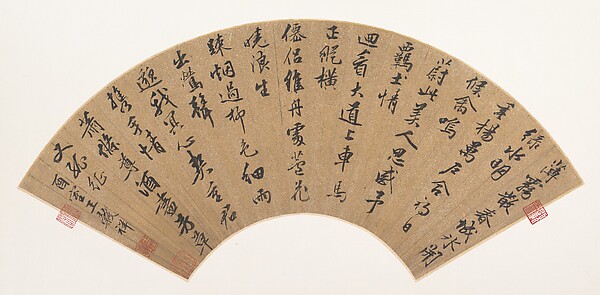
Image And Next Reading: The calligraphy surface fits because this page is about transmitted arguments and compact source phrases. It should not be read as a portrait of Mencius or as proof of a manuscript. The next useful step is to compare the qi and xin concept pages, which show how Mencius joins moral vitality, reflection, and public conduct.
Argument Is The Main Evidence: The recalled Mencius materials are useful because they show argument rather than slogan. Compassion is presented as a beginning, xin is described through its office of thinking, and political legitimacy is ranked through people, altars, and ruler. Each material presses a claim through sequence. The guide should therefore teach readers to ask how Mencius persuades, not only what he concludes.
Why One Goodness Line Is Not Enough: A thin Mencius page can sound complete once it says human nature is good. The recalled corpus shows why that is insufficient. Mencius moves among moral feeling, reflective heart-mind, analogies, rulerly responsibility, and public order. The guide keeps those layers visible so readers do not use one famous thesis to erase the argumentative texture of the text.
Keep the term set visible here: ren, xin, bu ren ren. The reading changes if one of these terms is translated too smoothly.
The reading should end in one practical move: Read a Mencius concept page on qi or xin after checking the compassion passage.