First Source To Open
This block uses Spring View, Du Fu, Tang poem as the anchor, with "國破山河在,城春草木深。感時花濺淚,恨別鳥驚心。" kept in front of the explanation.
Spring View Is Public And Private: Spring View begins with a broken state and remaining mountains and rivers. Flowers and birds do not offer relief; they are tied to tears and a startled heart. This recalled material makes the guide's first point clear: Du Fu often lets landscape carry public and private grief at once. The scene cannot be read as neutral nature.
Moonlit Night Changes The Center: Moonlit Night is useful because it does not simply repeat Spring View. The speaker imagines his wife looking at the moon in Fuzhou while the children do not yet understand Chang'an. The recalled poem shifts from public crisis to separated household feeling. It teaches the guide to keep family relation and historical condition together.
Climbing High Compresses Late Sorrow: Climbing High adds another Du Fu mode: wind, sky, apes, sand, birds, falling leaves, and the endless river gather into the speaker's aging and illness. The poem's famous density is not just ornament. The recalled material shows how scenery, body, and time become inseparable under regulated form.
Do Not Let The Label Do The Reading: Calling Du Fu a poet-historian can be helpful, but it can also become a shortcut. The three recalled poems show different mechanisms: public ruin in Spring View, imagined family distance in Moonlit Night, and late-life compression in Climbing High. A source guide should make those differences visible before using any broad literary label.
How The Work Changes The Author Label
How English Readers Should Proceed: Read Du Fu by marking pairs: state and landscape, family and distance, body and season. Then look at how a couplet holds tension without explaining it away. English translations often smooth the grammar, so the reader should return to the Chinese nouns and verbs that create pressure inside each line.
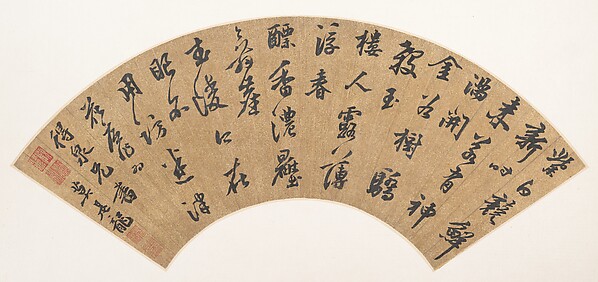
Image And Next Reading: The historical poem sheet fits because Du Fu reading depends on transmitted poetic text and dense line relation. It is illustrative, not documentary proof. The next useful reading step is to compare Spring View with a Li Bai moon poem, so the reader sees two very different uses of moon, distance, and memory.
Compression Is A Source Feature: The recalled Du Fu materials show compression at several scales. Spring View binds state ruin to flowers and birds; Moonlit Night moves family grief through imagined distance; Climbing High folds season, age, illness, and endless river into regulated lines. The guide should teach readers to see that compression instead of merely calling Du Fu serious or historical.
History Does Not Replace The Poem: Historical background helps with Du Fu, but it can become another shortcut if it replaces line reading. This source guide keeps history and wording together. A reader should be able to point to the specific nouns, images, and formal pressure that carry public crisis or private grief. That is stronger than repeating the label poet-historian.
Keep the term set visible here: guo po, shan he, gan shi. The reading changes if one of these terms is translated too smoothly.
The reading should end in one practical move: Read Spring View before using Du Fu as a general symbol of poetic seriousness.