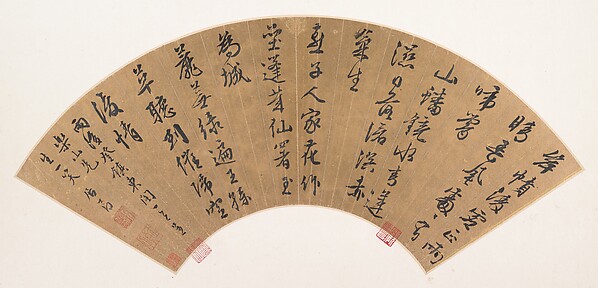
The Poem Before Paraphrase
This block uses Climbing High, Du Fu, 登高 as the anchor, with "風急天高猿嘯哀,渚清沙白鳥飛迴。無邊落木蕭蕭下,不盡長江滾滾..." kept in front of the explanation.
Full Text: The page uses all eight lines because the regulated poem builds through paired pressure. The first half opens the landscape. The second half shows why the high place hurts: distance, autumn grief, guesthood, illness, age, hardship, and the loss of wine as comfort.
Urgent Wind And High Sky: Feng ji and tian gao make the scene feel exposed. The weather is not gentle. The gibbon cries add grief before the speaker names grief directly. The first line already makes the height emotionally sharp.
Clear Islet, White Sand: Zhu qing sha bai gives precision and brightness, while birds fly back in circles. The clarity is beautiful, but it is not soothing. The circling motion keeps the scene restless, matching the poem's later sense of being unable to settle.
Falling Leaves And Yangtze: Wu bian and bu jin make the third and fourth lines feel vast. Leaves fall without boundary; the Yangtze comes without end. The landscape is both descending and advancing, which lets autumn become a force rather than a backdrop.
Images, Sound, And Emotional Turn
Guesthood And Illness: Wan li and bai nian bring the poem into human scale. The speaker is far away and often a guest, while illness has followed him through the years. Climbing high alone is therefore not a leisure outing; it is a moment of exposed self-recognition.
Stopping The Wine Cup: Xin ting zhuo jiu bei is easy to miss. Wine often appears as relief in poetry, but here the cup has newly stopped. The speaker's decline includes the loss of one ordinary consolation. That final detail makes the poem more bodily and less abstract.
Why The View Turns Inward: The poem does not abandon landscape when it turns to guesthood and illness. The exposed height has prepared that inward turn. Wind, sky, gibbon cries, circling birds, falling leaves, and river movement all make the speaker's condition visible before he names it. The landscape is therefore evidence, not decoration.
Du Fu's climbing high Translation Limit: This working translation keeps guest, hundred years, frost temples, and muddy wine because these details anchor the poem in age and circumstance. A smoother English paraphrase could sound elegant, but it would lose the poem's compression of public hardship and private body.
Keep the term set visible here: deng gao, luo mu, Changjiang. The reading changes if one of these terms is translated too smoothly.
Translation Choices To Keep Visible
Du Fu's climbing high Reading Payoff: This page differs from Li Bai's Mount Lu waterfall because Du Fu uses height to expose suffering rather than to intensify wonder. It differs from Gao Shi's farewell poem because comfort is not offered here. The article gives readers a source-based way to read the famous falling leaves and Yangtze couplet inside the whole poem's illness and exile structure.
Du Fu's climbing high Source Checkpoint: Let the poem move line by line before paraphrase begins: Climbing High, Du Fu, 登高, opening with "風急天高猿嘯哀,渚清沙白鳥飛迴。無邊落木蕭蕭下,不盡長江...". Keep deng gao beside the Chinese wording before accepting the readable English. On this page the source anchor is doing real work: it tells the reader where the claim begins, which phrase is being interpreted, and why the explanation should stay narrower than a later proverb or author label.
Du Fu's climbing high Reader Decision: The practical decision is whether the reader can watch image order, sound, and the emotional turn. Compare deng gao with luo mu, then ask which English phrase compresses the most. That check blocks the common mistake of summarizing the feeling before seeing how the lines create it; it also gives the page a finish line, so the reader leaves with a source habit rather than a smoother slogan.
The reading should end in one practical move: Compare this page with Li Bai's Mount Lu waterfall before using high scenery as a generic symbol of grandeur.