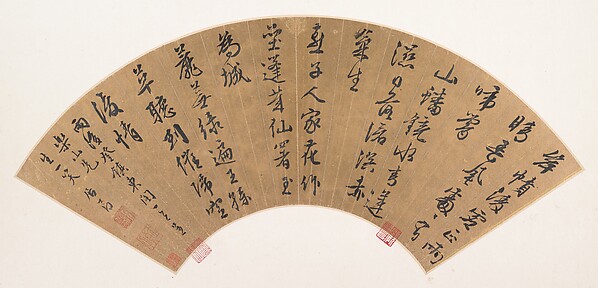
The Poem Before Paraphrase
This block uses Five Poems on Parting Thoughts, Yuan Zhen, 離思五首 其四 as the anchor, with "曾經滄海難為水,除卻巫山不是雲。取次花叢懶迴顧,半緣修道半緣..." kept in front of the explanation.
Full Text: The page uses the fourth poem from Lisi wushou because the four lines form a complete argument. The sea and Wushan comparisons establish unmatched experience. The flower line tests the speaker's response to other attractions. The final line explains restraint through practice and memory.
The Vast Sea: Cang hai is not just big water. It is the vast sea, an image of overwhelming prior experience. After such a scale, ordinary waters no longer seem adequate. The line makes comparison itself difficult, which is why it became so quotable.
Wushan Clouds: Wushan clouds carry literary and erotic resonance, but the page keeps the explanation modest. The line says that apart from Wushan, clouds are not really clouds. It pairs with the sea line to create a structure of absolute comparison.
Images, Sound, And Emotional Turn
Passing Through Flowers: Qu ci hua cong lan hui gu shifts from vast landscape to human temptation or distraction. The speaker passes among flowers but is too weary or unwilling to look back. Flowers can suggest other beauties, but the poem does not turn that into a simple moral lecture.
Half Cultivation: Ban yuan xiu dao is easy to flatten. Cultivating the Way may suggest religious discipline, withdrawal, or self-restraint. The line says only half the reason lies there. The poem refuses to make grief either pure doctrine or pure emotion.
Half Because Of You: Ban yuan jun brings the poem back to the absent person. The final word makes the previous grandeur personal. The sea, clouds, flowers, and cultivation are not abstract images; they circle one remembered relationship.
Keep the term set visible here: cang hai, Wushan, hua cong. The reading changes if one of these terms is translated too smoothly.
Translation Choices To Keep Visible
Yuan Zhen's parting grief Translation Limit: This working translation keeps difficult comparison language rather than smoothing it into no one compares to you. That modern paraphrase is tempting, but it erases the poem's structure: unmatched experience, rejected comparison, resisted distraction, and split explanation.
Why The Last Line Matters: The last line prevents the poem from becoming only a display of absolute devotion. Half cultivation and half because of you means the speaker's restraint has two sources: disciplined withdrawal and continuing personal attachment. That divided explanation keeps the poem emotionally tense. The reader hears both a cultivated pose and a grief that cultivation has not erased.
Yuan Zhen's parting grief Reading Payoff: This page differs from Li Shangyin's Untitled because Yuan Zhen's grief is direct and comparative, while Li Shangyin builds separation through dense allusion. It differs from Bai Juyi's Song of Everlasting Sorrow because the grief here is compressed into four lines rather than narrated through legend. The article gives readers a source-based way to use the famous first couplet without losing the final line.
The reading should end in one practical move: Compare this page with Li Shangyin's Untitled and Bai Juyi's Song of Everlasting Sorrow before quoting the sea line as a simple love slogan.