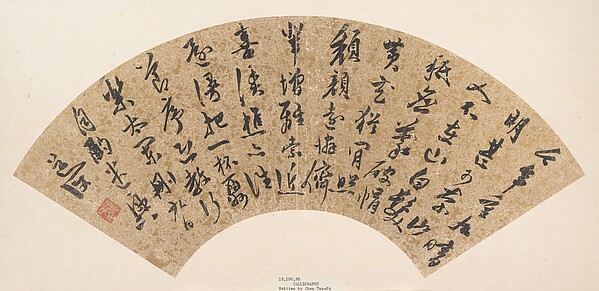
The Poem Before Paraphrase
This block uses Untitled, Li Shangyin, poem beginning 相見時難別亦難 as the anchor, with "相見時難別亦難,東風無力百花殘。春蠶到死絲方盡,蠟炬成灰淚始..." kept in front of the explanation.
Full Poem: The page uses all eight lines because each couplet changes the pressure of separation. The poem begins with meeting and parting, turns to spring exhaustion, then to silkworm and candle images, then to dawn mirror and night chanting, and finally to the mythic messenger bird. A short quotation misses that layered movement.
Meeting And Parting: Xiang jian shi nan bie yi nan makes difficulty double. Meeting is hard, and parting is also hard. The line refuses a simple contrast where union is good and separation is bad. Even meeting carries difficulty because the relationship exists under constraint, distance, or uncertainty.
Spent Spring: Dong feng wu li bai hua can gives spring itself a weakened body. The east wind has no strength, and the flowers are spent. This is not bright spring renewal. The season is already failing. The outer world mirrors the emotional depletion introduced by the first line.
Images, Sound, And Emotional Turn
Silkworm Thread: Chun can dao si si fang jin is one of the poem's most famous images. The silkworm's thread is exhausted only at death. The line suggests devotion, longing, or speech that cannot stop while life remains. It is powerful because si, silk thread, also echoes the sound of longing in later reading traditions, though the page does not force that into the translation.
Candle Tears: La ju cheng hui lei shi gan pairs with the silkworm line. A candle's tears dry only when it has become ash. The image is not only sadness; it is self-consuming duration. The poem makes feeling visible as material depletion: thread drawn out, wax burned down, tears drying only at the end.
Dawn Mirror: Xiao jing dan chou yun bin gai imagines worry before the dawn mirror that cloudlike hair has changed. The poem shifts from symbolic objects to the body. Separation alters time, and time alters the face and hair. The line makes longing not just emotional but visible in aging or changed appearance.
Keep the term set visible here: xiang jian, bie, chun can. The reading changes if one of these terms is translated too smoothly.
Translation Choices To Keep Visible
Cold Moonlight: Ye yin ying jue yue guang han brings the other person into night chanting and cold moonlight. The poem imagines how the beloved might feel. Moonlight is not simply beautiful; it is cold. This keeps the poem close to separation rather than decorative nocturne.
Blue Bird Messenger: Peng shan and qing niao bring in an allusive, mythic register. Peng Mountain suggests an unreachable or otherworldly place; the blue bird can serve as messenger. The poem ends by asking the bird to look in attentively. The request is tender, but it does not erase distance.
Li Shangyin's Untitled poem Reading Payoff: This page differs from Du Fu's Moonlit Night because Li Shangyin's separation is more allusive and image-dense, while Du Fu relocates viewpoint to family. It differs from Wang Wei's Parting because this poem intensifies feeling through self-consuming metaphors rather than mountain restraint. The article gives readers a source-based way to read the imagery without flattening it into a greeting-card line.
The reading should end in one practical move: Compare this page with Wang Wei's Parting and Du Fu's Moonlit Night before using the poem as a simple love quote.