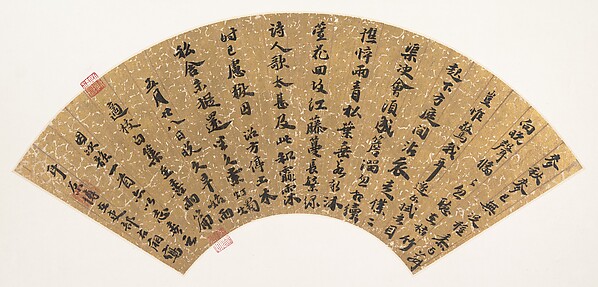
The Source Pair Behind The Theme
This block uses Tao Te Ching and Analects, Tao Te Ching 1 and Analects 2.17 as the anchor, with "《道德經》:道可道,非常道。名可名,非常名。《論語》:知之為..." kept in front of the explanation.
Dao As Word And Movement: Tao Te Ching 1 is difficult because dao appears as the thing named and as the act of speaking or guiding. If English translates every occurrence the same way, the sentence can become stiff. If English varies too freely, the wordplay disappears. The ambiguity is productive because it forces readers to notice the limits of naming and explanation.
Zhi As A Reading Drill: Analects 2.17 is less metaphysical but just as useful for reading. Zhi appears repeatedly, and the line depends on recognizing the difference between knowing, not knowing, and taking that distinction as knowing. The sentence teaches intellectual honesty through grammar. Its compactness is not decorative; it makes the reader perform the distinction.
Ambiguity Is Not Anything Goes: A weak reading treats ambiguity as permission to paraphrase loosely. A stronger reading asks what the grammar allows, what the repetition emphasizes, and what the surrounding passage can support. Dao and zhi are flexible, but they are not empty. Their flexibility has boundaries created by syntax, repetition, and source context.
classical Chinese ambiguity: Classical Chinese Wisdom with Sources Translation Pressure: The literal translation keeps dao-ed to show the problem, even though that is not smooth English. The readable translation then explains the pressure rather than pretending it disappears. For zhi, the translation keeps knowing visible several times because replacing every zhi with a different English word would hide the sentence's discipline.
What The Comparison Changes
Use In Learning Classical Chinese: Students can use these two lines as a small method. First, identify repeated graphs. Second, ask whether each occurrence acts as noun, verb, adjective, or marker in context. Third, decide where English must stay awkward and where it may become readable. This method prevents both over-literal translation and free-floating interpretation.
classical Chinese ambiguity: Classical Chinese Wisdom with Sources Reading Payoff: This page is not a general claim that classical Chinese is mysterious. It gives two exact anchors where ambiguity is visible and teachable: dao and ming in Tao Te Ching 1, zhi in Analects 2.17. That makes the page useful for beginners and translators.
Keep Awkwardness When It Teaches: Sometimes a literal layer must be awkward because the awkwardness teaches the problem. Dao ke dao cannot be made perfectly smooth without hiding the repeated graph and its shifting force. Zhi zhi wei zhi zhi sounds repetitive in English because the Chinese is deliberately repetitive. The page uses that awkwardness as a learning tool before giving a more readable explanation.
classical Chinese ambiguity: Classical Chinese Wisdom with Sources Reader Test: A reader should be able to mark which repeated word is carrying the difficulty. For Tao Te Ching 1, dao and ming create the interpretive pressure. For Analects 2.17, zhi creates the ethical pressure around knowing and not knowing. If a translation removes all repetition and the note never explains what was removed, the reader loses the very feature that made the line teachable.
Keep the term set visible here: dao, ming, chang. The reading changes if one of these terms is translated too smoothly.
The reading should end in one practical move: After classical Chinese ambiguity: Classical Chinese Wisdom with Sources, read Translation Choices For Dao for the primary source anchor, then Tao Te Ching Chapter 1 for contrast; decide whether dao belongs to a quote, chapter, term page, or reading habit before following the theme further.