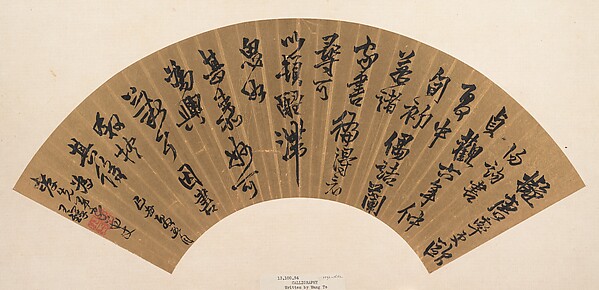
The Chapter's Opening Move
This block uses Tao Te Ching, Chapter 1 as the anchor, with "道可道,非常道;名可名,非常名。無名天地之始;有名萬物之母。..." kept in front of the explanation.
The Spoken Way: Dao ke dao is famous because it repeats the same word in different functions. The way that can be made into a spoken way is not the chang dao, the constant Way. This does not erase all speech; it places a limit on speech's claim to finality.
Naming And Limits: Ming ke ming gives the same limit through naming. A name that can be named is not the constant name. Names help the world become discussable, but the chapter warns that naming also fixes what exceeds the name. This is why a translation should not pretend that Dao simply equals way, nature, truth, or God. Each English choice opens one path and closes another.
Nameless Beginning: Wu ming tian di zhi shi makes namelessness the beginning of heaven and earth. The page keeps namelessness as a philosophical position rather than a blank absence. It points to origin before the world is divided into named things.
Named Mother: You ming wan wu zhi mu makes naming the mother of the ten thousand things. Chapter 1 therefore does not simply prefer namelessness over names. It asks readers to see that both the nameless and the named have a role in how reality is approached.
Contrast And Reversal Inside The Chapter
Desire And Observation: The lines on desire are difficult. Without desire, one observes mystery; with desire, one observes the boundary or outer manifestation. The page avoids turning this into a moral scolding. It is a way of describing two modes of seeing. Desire does not merely mean bad appetite here; it marks an interested stance toward the world, a stance that can notice edges but may miss the hidden depth.
Mystery Upon Mystery: Xuan zhi you xuan, mystery upon mystery, closes the chapter by deepening rather than solving the problem. The door of many wonders is not a simple answer. It is an invitation to read the rest of the text with humility about names.
Tao Te Ching Chapter 1: The Way That Can Be Spoken Explained Citation Limit: A careful citation should not stop at the first sentence as if the text only rejects language. Chapter 1 also gives names, origins, desire, boundaries, and mystery. The first line is a threshold, not the whole argument. A useful citation should say whether it is discussing naming, origin, desire, or mystery; otherwise the opening can become an attractive but vague aphorism.
Tao Te Ching Chapter 1: The Way That Can Be Spoken Explained Reading Payoff: This page differs from the Laozi nameless-beginning quote page because it follows the whole chapter's movement from speakable Dao to mystery's gate. It differs from desire and clarity because it begins with naming itself. The article gives readers a source-safe chapter 1 explanation without pretending Dao can be reduced to one English word.
Keep the term set visible here: dao, ming, wu ming. The reading changes if one of these terms is translated too smoothly.
The reading should end in one practical move: Compare this page with Laozi's nameless beginning before treating Dao as a simple definition.