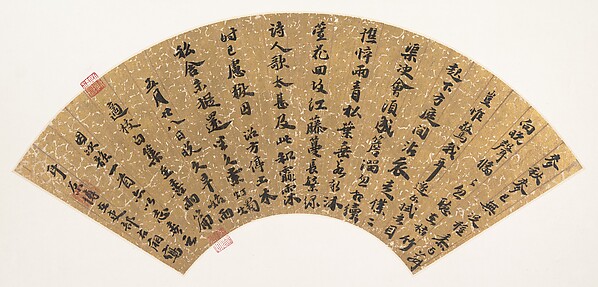
The Source Pair Behind The Theme
This block uses Tao Te Ching and Analects, Tao Te Ching 8 and Analects 9.17 as the anchor, with "《道德經》:上善若水。水善利萬物而不爭,處眾人之所惡,故幾於..." kept in front of the explanation.
Laozi's Water: In Tao Te Ching 8, water is an ethical and political image. It benefits the ten thousand things, does not contend, and occupies places people dislike. That last clause matters because the water image is not only softness. It is also low position, usefulness without claim, and a refusal to compete for visible height. This is why the passage says water is near the Dao.
Confucius By The River: The Analects river saying is shorter and more open. Confucius stands by a stream and says that what passes is like this, not giving up day or night. The line does not praise water as moral softness. It directs attention to flow, passing, and continuity. A reader should not import the Tao Te Ching chapter 8 meaning into the Analects scene too quickly.
Same Image, Different Work: The comparison is strongest when the image is allowed to do different work. Laozi's water teaches non-contention and low-place strength. Confucius's river teaches awareness of time and ongoing movement. Both passages invite observation rather than abstract definition, but the moral pressure is different. One asks how to benefit without competing; the other asks how to notice passing without pause.
water in Chinese thought: Classical Chinese Wisdom with Sources Translation Pressure: Shang shan can be highest goodness, best excellence, or highest good. Bu zheng is non-contention, not passivity. In the Analects line, shi zhe points to what goes, passes, or flows away. The working translation keeps these terms visible so English readers can see why water is not merely a calm or pretty image.
What The Comparison Changes
Use In Teaching: For a class or essay, cite Tao Te Ching 8 when discussing water as a model for low, non-contentious benefit. Cite Analects 9.17 when discussing time, change, or the Master's reflective observation. Pairing the passages can be helpful, but only if the reader says clearly which text is making which claim.
water in Chinese thought: Classical Chinese Wisdom with Sources Reading Payoff: This page differs from a single Laozi water quote because it adds the Analects river scene and prevents the image from becoming one universal symbol. It gives English readers a source-based comparison: water can teach low helpfulness in one passage and ceaseless passing in another.
Low Place And Passing Flow: The low place in Tao Te Ching 8 and the passing flow in Analects 9.17 should not be collapsed into one spiritual image. Laozi asks the reader to notice that water benefits things and does not contend for position. Confucius asks the reader to notice ceaseless passage. One is about how to act in relation to others; the other is about how to see time and movement.
water in Chinese thought: Classical Chinese Wisdom with Sources Reader Test: A strong explanation should be able to say why chu zhong ren zhi suo wu, staying where people dislike, is not present in the Analects river line. It should also say why bu she zhou ye, not stopping day or night, is not the main point of Tao Te Ching 8. The page passes only if those differences remain visible.
Keep the term set visible here: shui, shang shan, bu zheng. The reading changes if one of these terms is translated too smoothly.
The reading should end in one practical move: After water in Chinese thought: Classical Chinese Wisdom with Sources, read Shang Shan Ruo Shui for the primary source anchor, then Analects Passage on The Master On The River for contrast; decide whether shui belongs to a quote, chapter, term page, or reading habit before following the theme further.