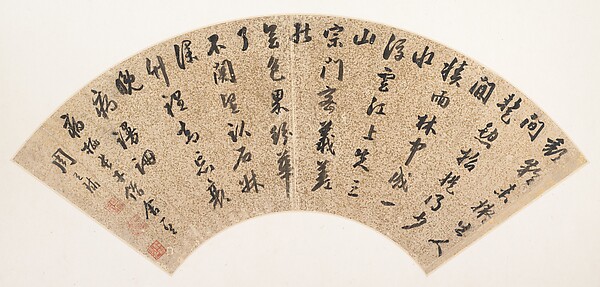
The Teaching Scene
This block uses Analects, Book 5.26, Gong Ye Chang as the anchor, with "顏淵、季路侍。子曰:盍各言爾志?子路曰:願車馬衣輕裘與朋友共..." kept in front of the explanation.
A Conversation About Aims: The passage begins with Confucius asking Yan Yuan and Jilu, also called Zilu, to speak of their zhi, their aims or aspirations. That frame matters. The final line is not dropped into the text as a standalone public policy sentence. It is Confucius's own answer to a question about what kind of life or influence a person hopes to have.
Zilu's Shared Goods: Zilu's answer imagines sharing carriages, horses, clothing, and light furs with friends, then feeling no regret if those goods are worn out. His aim is generous and concrete. The passage lets that generosity stand before Confucius speaks. A careful reading should not skip Zilu, because his answer prepares the friendship theme that returns in Confucius's line.
Yan Yuan's Hidden Virtue: Yan Yuan's answer is inward and restrained: he wishes not to boast of his good points and not to impose his labors. This adds another measure of virtue. The passage is not only about social benefit but also about how virtue is carried. Yan Yuan's wish guards against making goodness into display or burden.
The Word That Changes The Passage
Confucius's Social Wish: When Zilu asks to hear the Master's aim, Confucius answers with three relationships. The old, friends, and the young form a compact social world. The wish moves beyond possessions or personal modesty into the condition of people around him. That is why the line feels broad without needing abstract language.
The Old At Ease: Lao zhe an zhi can be read as letting the old be at ease or bringing rest to older people. An points to settled ease, not mere survival. The phrase gives age a place of care and stability. It also keeps the passage from becoming only a friendship saying. The vulnerable edge of age is part of Confucius's aspiration.
Friends Trusting: Pengyou xin zhi brings trust into friendship. Xin can mean trustworthiness or being trusted. This middle phrase links Zilu's generosity with a deeper social reliability. Friends should not merely receive goods; they should be able to trust the person. The passage treats friendship as a field where character becomes credible.
Keep the term set visible here: Yan Yuan, Zilu, zhi. The reading changes if one of these terms is translated too smoothly.
Use The Passage Without Flattening It
The Young Cherished: Shao zhe huai zhi is more than being fond of the young. Huai can suggest cherishing, holding in care, or drawing close. The phrase asks whether younger people feel held rather than neglected. In the line's sequence, care moves across generations: older people at ease, peers trusting, younger people cherished.
Analects The Old And The Young Later Citation Limit: A responsible citation should include the exchange if space allows. Quoting only the old, friends, and young sentence can hide the way Confucius's answer responds to Zilu and Yan Yuan. The full source shows three forms of aspiration: generous sharing, quiet virtue, and relational care across age and friendship.
Analects The Old And The Young Reading Payoff: This page differs from friendship-and-correction because it reads friendship inside a three-part social wish, not as correction alone. It differs from governing-through-example because the passage is framed as personal aspiration rather than explicit rule. The article gives readers a source-based way to explain care for old and young without detaching the line from its conversation.
The reading should end in one practical move: Compare this page with friendship and correction and governing through example before using the line as a general social-care quote.