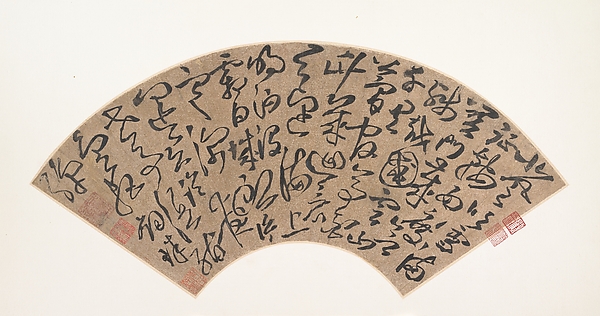
The Poem Before Paraphrase
This block uses Grass On The Ancient Plain, Sent As Farewell, Bai Juyi, 賦得古原草送別 as the anchor, with "離離原上草,一歲一枯榮。野火燒不盡,春風吹又生。遠芳侵古道,..." kept in front of the explanation.
Full Text: The page uses all eight lines because the popular middle couplet does not contain the whole poem. The first half gives seasonal persistence; the second half gives old roads, ruined city, and farewell. Without the ending, the poem becomes a generic resilience quote.
Grass On The Plain: Li li yuan shang cao gives a broad field image. The grass is not a single plant but a plain-wide presence. The phrase prepares the poem's scale: one person's farewell takes place inside a landscape that has seen many cycles.
Wither And Flourish: Yi sui yi ku rong states the yearly rhythm. The grass withers and flourishes once each year. The line is not only optimistic. It includes loss and return together, which makes the wildfire couplet more complex than a simple victory image.
Images, Sound, And Emotional Turn
Wildfire And Spring Wind: Ye huo shao bu jin and chun feng chui you sheng are often quoted alone. The page keeps them as a pair: destructive force fails to finish the grass, and ordinary seasonal wind lets it live again. Renewal comes through cycle, not instant rescue.
Old Road And Ruined City: The grass reaches an old road and connects to a ruined city. These lines move from natural cycle into human history. Roads and cities carry travel, memory, and loss. The green is beautiful, but it spreads across places marked by time.
Farewell Turn: You song wang sun qu makes the poem explicitly about sending someone away. The grass is not only resilient; it fills the farewell field. Qi qi man bie qing gives texture to parting feeling, so the poem's emotional center arrives at the end.
Keep the term set visible here: li li, ku rong, ye huo. The reading changes if one of these terms is translated too smoothly.
Translation Choices To Keep Visible
Why It Is Not Only Resilience: The wildfire couplet is powerful, but the poem does not stop there. The grass returns, spreads, reaches roads and ruined city walls, then fills a farewell scene. That movement changes the meaning. Renewal is not a slogan by itself; it is the living background against which another departure happens.
Bai Juyi's grass poem Translation Limit: This working translation keeps noble traveler for wang sun and parting feeling for bie qing. It avoids turning the poem into a modern motivational slogan because the source text joins persistence, old places, and farewell rather than making a general promise of success.
Bai Juyi's grass poem Reading Payoff: This page differs from Li Bai's Yellow Crane Tower farewell because Bai Juyi's parting is grounded in grass, old road, and ruined city rather than river distance and a vanishing sail. It differs from Du Mu's Qingming because the road here carries farewell rather than rain-season searching. The article gives readers a source-based way to quote wildfire and spring wind without losing the farewell frame.
The reading should end in one practical move: Compare this page with Li Bai's Yellow Crane Tower farewell before quoting wildfire and spring wind as only a resilience slogan.