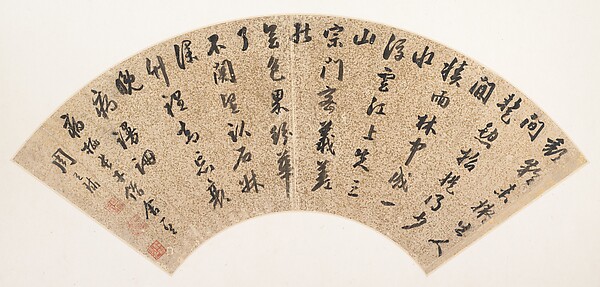
The Teaching Scene
This block uses Analects, Book 4.17, Li Ren as the anchor, with "子曰:見賢思齊焉;見不賢而內自省也。" kept in front of the explanation.
Seeing Comes First: Jian begins both halves of the saying. The passage starts from encounter: seeing a worthy person and seeing one who is not worthy. This matters because the quote does not begin with abstract moral theory. It describes how a learner should respond when human examples appear in ordinary life. The eye sees another person, but the work does not end with looking.
What Xian Means: Xian can mean worthy, excellent, or morally capable. The term is not only talent or status. In the Analects setting, worth concerns cultivated conduct. Seeing xian therefore creates a standard. The worthy person is not a celebrity to admire from afar, but a living prompt to raise one's own practice.
Thinking Of Equaling: Si qi yan is compact and important. Si means to think or reflect; qi suggests becoming equal or aligned. The response to worth is not jealousy, flattery, or passive admiration. It is the thought: how might I reach that standard? The page translates cautiously because becoming equal does not mean copying every trait, but letting excellence call forth formation.
Seeing The Unworthy: The second half begins with jian bu xian, seeing one who is not worthy. The line does not invite public contempt. It immediately turns the sight inward. That turn is crucial. If a reader stops at judging the other person, the passage has been missed. The not-worthy example is useful only when it exposes something to examine in oneself.
The Word That Changes The Passage
Inward Self-examination: Nei zi xing means inwardly examine oneself. Nei keeps the direction internal; zi xing names self-inspection. The passage does not let the learner become morally comfortable by noticing another person's flaw. Instead, it asks whether a similar pattern lives in the self. That is why the line belongs with self-cultivation, not with social comparison.
Two Uses Of Comparison: Comparison often becomes envy upward and contempt downward. Analects 4.17 disciplines both. Upward comparison becomes emulation; downward comparison becomes self-examination. The page keeps the two halves together because either half alone can be distorted. Worth without inward checking can become ambition; unworthiness without emulation can become judgmental distance.
Analects Seeing A Worthy Person Citation Limit: A responsible citation should include both halves and the source location. If only seeing the worthy is quoted, the line can sound like a study of role models. If only self-examination is emphasized, the positive call to emulate worth disappears. Analects 4.17 is strongest when the reader can name both movements: rise toward the worthy and examine oneself before what is not worthy.
Analects Seeing A Worthy Person Reading Payoff: This page differs from three-people-walking because it focuses on the learner's inward response to worth and unworthiness, not on companions as teachers. It differs from daily self-examination because the trigger here is seeing another person's conduct. The article gives readers a source-based way to use the line without turning comparison into ranking.
Keep the term set visible here: xian, si qi, nei. The reading changes if one of these terms is translated too smoothly.
The reading should end in one practical move: Compare this page with three people walking and self-cultivation before using the quote as ambition advice.