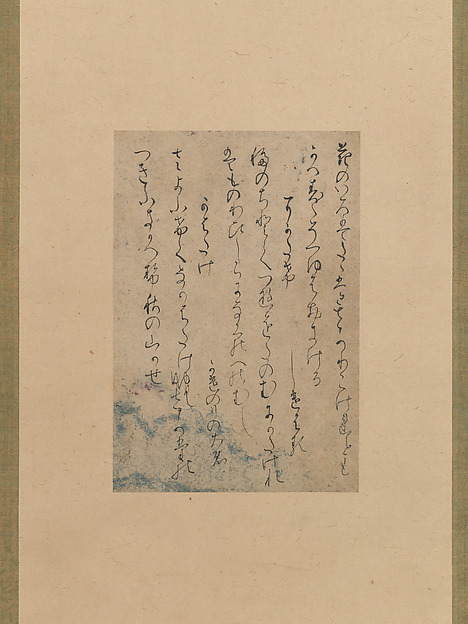
The Teaching Scene
This block uses Analects, Book 13.3, Zi Lu as the anchor, with "子路曰:衛君待子而為政,子將奚先?子曰:必也正名乎!子路曰:..." kept in front of the explanation.
Why The Long Passage Matters: Rectifying names is often quoted as a short doctrine, but Analects 13.3 is a dialogue. Zilu asks what Confucius would do first in government, objects that the answer seems roundabout, and receives a long explanation. The page uses the longer passage because the doctrine becomes clearer when the objection and sequence remain visible.
Zilu's Practical Objection: Zilu thinks rectifying names sounds indirect. His objection is useful because many modern readers feel the same way. Why start with names when there are urgent political tasks? Confucius answers that language is not cosmetic. If public names and roles are wrong, speech and action lose their footing.
Names And Speech: Ming bu zheng, ze yan bu shun says that when names are not correct, speech does not accord. Names here are not mere labels. They concern roles, offices, relationships, and what can rightly be said about them. If those terms are confused, speech cannot guide action reliably.
Speech And Affairs: Yan bu shun, ze shi bu cheng continues the chain: if speech does not accord, affairs do not succeed. The passage is practical. Confucius is not doing wordplay. He is saying that public action depends on language that can be spoken, understood, and carried out without hidden contradiction.
The Word That Changes The Passage
Rites, Music, And Punishment: When affairs fail, rites and music do not flourish; when rites and music do not flourish, punishments do not hit the mark. This chain shows a whole social order. Ritual, cultural practice, and legal consequence are connected. Bad naming eventually reaches the level of public penalty and ordinary people's lives.
The People Lose Footing: Min wu suo cuo shou zu says the people have nowhere to place hand or foot. This is a vivid image of social confusion. The people cannot act confidently because the public order no longer gives stable directions. The page keeps this image visible because it prevents rectifying names from sounding like abstract semantics.
Speakable And Practicable: The closing rule says that what the gentleman names must be speakable, and what he says must be practicable. This is the positive side of rectification. Names should support responsible speech, and speech should support action. The final warning is that the gentleman is not careless with words.
Analects Rectifying Names Reading Payoff: This page differs from names-and-social-roles pages because it follows the full chain in Analects 13.3, from naming to speech, affairs, rites, music, punishment, and the people's footing. It differs from harmony passages because its concern is not relation among differences but public language that can guide action. The article gives readers a source-safe way to cite rectifying names without shrinking it to a slogan.
Keep the term set visible here: Zilu, zheng ming, yan. The reading changes if one of these terms is translated too smoothly.
The reading should end in one practical move: Compare this page with names-and-social-roles and public-service pages before using rectifying names as a political concept.