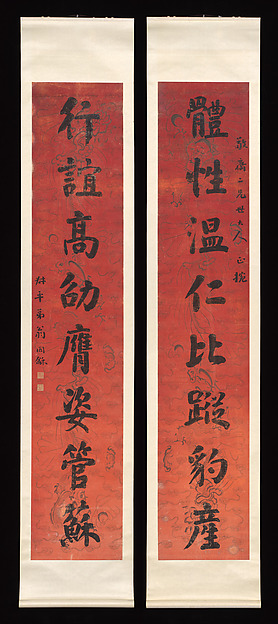
The Source Pair Behind The Theme
This block uses Tao Te Ching and Analects, Tao Te Ching 2 and Analects 4.16 as the anchor, with "《道德經》:是以聖人處無為之事,行不言之教。《論語》:君子喻..." kept in front of the explanation.
The Daoist Sage: Tao Te Ching 2 places the sage after a series of paired contrasts: beauty and ugliness, good and not-good, being and non-being, difficult and easy. The sage's wu wei is not laziness. It is a way of acting without forcing one side of a contrast into domination. Teaching without words belongs to the same pattern of non-display.
The Confucian Gentleman: Analects 4.16 defines the junzi through orientation. The junzi understands or is alive to yi, rightness; the small person understands or is alive to li, profit. This is not a claim that the gentleman never handles material life. It is a claim about what guides judgment when values compete.
Two Ideals, Two Tests: The sage is tested by non-forcing action and wordless teaching. The gentleman is tested by whether rightness outranks profit. These tests can overlap in practice, but their textual logic differs. One comes from a Daoist chapter about paired arising and non-possession; the other from a Confucian contrast between moral orientation and gain.
Why The Titles Should Not Merge: English pages sometimes use sage, gentleman, noble person, and wise person loosely. This page resists that habit. Shengren and junzi belong to different textual worlds, even when both name admired persons. Merging them makes the comparison easy but unhelpful. Keeping them apart lets readers see how each tradition imagines exemplary conduct.
What The Comparison Changes
the sage and the gentleman: Classical Chinese Wisdom with Sources Translation Pressure: Shengren may be sage or sacred person; junzi may be gentleman, noble person, or exemplary person. Yi can be rightness or righteousness, while li is profit, benefit, or gain. The working translation chooses plain terms but keeps the Chinese visible because every English choice carries cultural baggage.
the sage and the gentleman: Classical Chinese Wisdom with Sources Reader Test: A reader should be able to answer two separate questions. What does the sage do with action and speech? What does the gentleman understand when profit is possible? If the answer becomes simply both are wise people, the source distinction has disappeared. The page should make the distinction memorable.
the sage and the gentleman: Classical Chinese Wisdom with Sources Reading Payoff: This page differs from a shengren or junzi term page because it compares the ideals side by side. It gives a Daoist source anchor for the sage and a Confucian source anchor for the gentleman, then shows why their virtues should be compared without being flattened.
Exemplarity Without One Mold: Both figures are exemplary, but they do not share one mold. The sage in Tao Te Ching 2 teaches through non-display after seeing that contrasts arise together. The gentleman in Analects 4.16 is sorted by what he understands: yi rather than li. One figure models a way of acting without possession; the other shows a moral orientation that resists profit as the final measure.
Keep the term set visible here: shengren, wu wei, bu yan. The reading changes if one of these terms is translated too smoothly.
How To Keep The Theme Honest
Use In Comparison Writing: A comparison essay should avoid saying Daoism values sages while Confucianism values gentlemen and stopping there. The stronger comparison asks what each figure is for. Shengren helps explain non-forcing, wordless teaching, and non-possession. Junzi helps explain rightness, role-formed conduct, and moral judgment. Their difference is the content, not an obstacle to smooth summary.
Modern Boundary: Neither figure should be turned into a personality type. The sage is not simply an introvert, and the gentleman is not simply a polite person. Both are textual ideals used to test conduct. This boundary keeps the page from becoming self-help typology and keeps attention on the source passages where the ideals are defined.
The reading should end in one practical move: After the sage and the gentleman: Classical Chinese Wisdom with Sources, read Shengren in Classical Chinese Thought for the primary source anchor, then Junzi in Classical Chinese Thought for contrast; decide whether shengren belongs to a quote, chapter, term page, or reading habit before following the theme further.