The Chapter's Opening Move
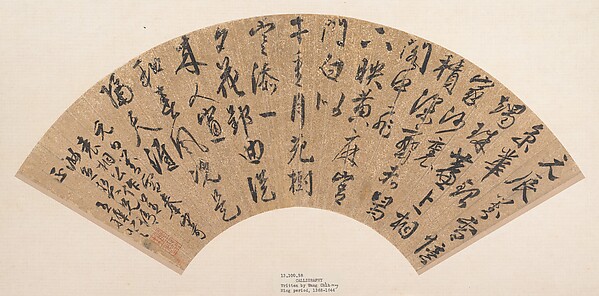
This block uses Tao Te Ching, Chapter 15 as the anchor, with "古之善為士者,微妙玄通,深不可識。夫唯不可識,故強為之容:豫..." kept in front of the explanation.
Too Deep To Recognize: Gu zhi shan wei shi zhe introduces the ancient masters, but the chapter immediately says they are deep beyond recognition. This matters because the text does not give a simple ideal personality. It admits that the figure cannot be fully grasped. The descriptions that follow are forced approximations, not photographic traits.
Cautious Crossing: Yu xi ruo dong she chuan compares them to someone crossing a winter river. The image carries caution, bodily risk, and attention to footing. It is not fearfulness as weakness. It is careful action in a dangerous setting. This makes the ancient master different from a bold hero or a confident expert.
Wary And Guestlike: You xi ruo wei si lin and yan xi qi ruo ke add social posture: wary as if fearing neighbors, dignified as if a guest. The chapter praises restraint in relation to others. A guest does not seize the house; a wary person does not assume mastery over the situation. The page keeps these images separate instead of summarizing them as humility only.
Contrast And Reversal Inside The Chapter
Melting Ice And Plain Block: Huan xi ruo bing zhi jiang shi and dun xi qi ruo pu give two different textures. Melting ice suggests release and transition; pu suggests plain, uncarved thickness. Together they prevent a single image from dominating. The master is not only soft and dissolving, and not only solid and plain. The chapter's portrait is intentionally layered.
Valley, Mud, Sea, Wind: Kuang xi qi ruo gu, hun xi qi ruo zhuo, dan xi qi ruo hai, and liao xi ruo wu zhi expand the image chain. Open like a valley, mixed like muddy water, broad like the sea, moving as if without stopping. The page preserves this sequence because each image adds a different quality: openness, opacity, breadth, and unforced movement.
Muddy Water Clears: Shu neng zhuo yi jing zhi xu qing asks who can let muddy water become clear by stillness. The line is not a command to force clarity. It suggests that some clarity arrives through quiet settling. This connects the ancient master's depth to practice: do not stir everything in the name of quick knowledge.
Keep the term set visible here: xuan tong, pu, gu. The reading changes if one of these terms is translated too smoothly.
Reader Limit For Modern Use
Stillness And Movement: Shu neng an yi dong zhi xu sheng asks who can let what is settled gradually come alive through movement. Chapter 15 does not choose stillness against movement. It pairs them: stillness can clarify, and movement can bring life. This is why the page avoids making the chapter a simple quietism passage.
Not Wanting Fullness: Bao ci dao zhe bu yu ying says those who preserve this Dao do not desire fullness. The ending returns to a theme from chapter 9: fullness is unstable. Because they do not desire fullness, they can be worn or covered and yet newly completed. The page reads this as disciplined incompletion, not failure to mature.
Tao Te Ching Chapter 15: Ancient Masters Explained Reading Payoff: This page differs from chapter 9 because it turns not-fullness into a portrait of practice rather than a warning about wealth and pride. It differs from the uncarved-block page because pu is only one image in a larger chain. The article gives readers a source-safe chapter 15 explanation without collapsing the ancient masters into generic sages.
The reading should end in one practical move: Compare this page with chapter 9 and the uncarved-block page before using ancient masters as a generic wisdom label.