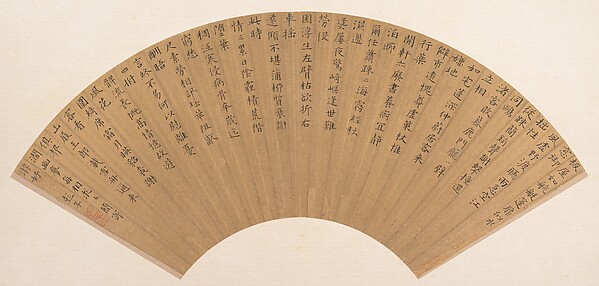
The Chapter's Opening Move
This block uses Tao Te Ching, Chapter 2 as the anchor, with "天下皆知美之為美,斯惡已;皆知善之為善,斯不善已。故有無相生..." kept in front of the explanation.
Beauty Creates Contrast: The opening does not simply attack beauty. It says that when beauty is fixed as beauty, ugliness appears with it. The act of ranking and naming creates contrast. That is why the chapter begins with social knowledge, not private taste alone.
Good And Not Good: The same pattern appears with goodness. When everyone knows good as good, not-good is already there. The line warns that moral labeling can create opposition and comparison. It does not say goodness is worthless; it asks readers to notice the shadow created by naming.
Paired Relations: The middle of the chapter lists relations: being and nonbeing, difficult and easy, long and short, high and low, sound and voice, before and after. These pairs do not stand alone. Each term becomes visible through its relation to another. The list slows the reader down so beauty and goodness are not treated as one isolated paradox. The whole chapter trains attention to co-arising contrast.
Wu Wei In Context: Shi yi introduces the sage's response. Because contrasts arise relationally, the sage practices wu wei, action without forcing. Here wu wei is not passivity. It is action that does not create extra attachment, display, or possessive claim.
Contrast And Reversal Inside The Chapter
Teaching Without Words: Bu yan zhi jiao, teaching without words, belongs with the chapter's caution about labels. The sage's teaching is not anti-language in every sense. It is a mode of influence that does not depend on loud naming and competitive self-display. In chapter 2, wordless teaching follows a world where categories produce their opposites; the sage therefore teaches by presence and pattern rather than by forcing names.
Not Possessing The Work: The chapter ends with a series of non-possessive clauses: producing without owning, acting without relying on credit, completing work without dwelling in it. The point is not to erase work, but to avoid turning work into self-claim.
Tao Te Ching Chapter 2: Beauty And Contrast Explained Citation Limit: A careful citation should not quote beauty and ugliness as if Laozi merely dislikes standards. The chapter moves from contrast to the sage's conduct. Its practical lesson is about acting within a relational world without clinging to possession or status. If the opening is used in an essay, the paired list and the non-possessive ending should be mentioned so the quote does not become shallow relativism.
Tao Te Ching Chapter 2: Beauty And Contrast Explained Reading Payoff: This page differs from the usefulness-of-emptiness quote because chapter 2 focuses on paired contrasts rather than containers and use. It differs from wu wei pages because it explains why non-forcing follows from relational naming. The article gives readers a source-safe chapter 2 explanation without flattening it into all values are relative.
Keep the term set visible here: mei, shan, you wu. The reading changes if one of these terms is translated too smoothly.
The reading should end in one practical move: Compare this page with wu wei before treating chapter 2 as simple relativism.