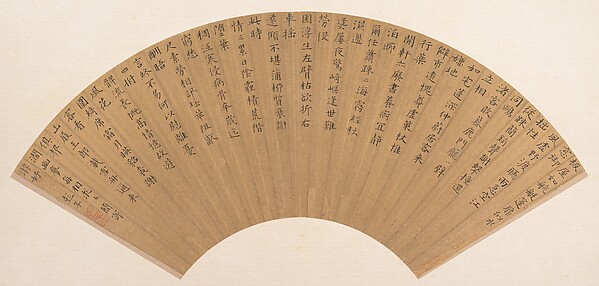
The Chapter's Opening Move
This block uses Tao Te Ching, Chapter 14 as the anchor, with "視之不見,名曰夷;聽之不聞,名曰希;搏之不得,名曰微。此三者..." kept in front of the explanation.
Look But Do Not See: Shi zhi bu jian begins with sight failing. The name yi is not treated here as a simple English adjective because the chapter is naming the failure of ordinary perception. The page keeps the technical label visible. This prevents the passage from becoming a vague claim that Dao is invisible in an ordinary sense.
Listen But Do Not Hear: Ting zhi bu wen gives the second failure. Hearing also cannot catch it. The term xi is paired with yi, and the page treats the pair as part of a threefold pattern rather than as separate mystical properties. The chapter's method is cumulative: sight, hearing, and touch each fail in turn.
Grasp But Do Not Obtain: Bo zhi bu de adds bodily grasping. After seeing and hearing fail, touch also fails. Wei names what is subtle or minute beyond capture. The page keeps this sequence because it shows that the chapter is not anti-vision only. It denies mastery by the usual faculties of knowing and possession.
Mixed Into One: Ci san zhe bu ke zhi jie, gu hun er wei yi says these three cannot be pursued to separate explanation, so they are mixed and become one. This matters for interpretation. The chapter gives names, then immediately prevents the reader from treating the names as neatly separable definitions. A careful reading keeps the labels and the mixing together.
Contrast And Reversal Inside The Chapter
Form Without Form: Wu zhuang zhi zhuang and wu wu zhi xiang are difficult phrases: form of no form, image of no thing. The page does not turn them into a polished modern abstraction. It explains the paradox as the chapter's way of naming what cannot be objectified. The wording lets the reader approach a pattern without pretending to possess an object.
No Head, No Rear: Ying zhi bu jian qi shou, sui zhi bu jian qi hou says meeting it, one does not see its head; following it, one does not see its rear. The source has no graspable beginning or ending from the observer's position. This keeps the chapter from being only about sensory absence. It is also about temporal and directional ungraspability.
Ancient Dao And Present Things: Zhi gu zhi dao, yi yu jin zhi you gives the practical turn: hold the ancient Dao to govern or manage present existence. Chapter 14 is not only negative mysticism. It uses the ungraspable ancient beginning as a way to orient present life. The page keeps this ending so the chapter has use without losing its mystery.
Tao Te Ching Chapter 14: The Invisible Form Explained Reading Payoff: This page differs from chapter 1 because it does not focus on naming as such; it focuses on perception failing and then guiding the present by the ancient beginning. It differs from chapter 4 because the image is not depth and dust but invisible form and ungraspable continuity. The article gives readers a source-safe chapter 14 explanation without reducing it to Dao is invisible.
Keep the term set visible here: yi, xi, wei. The reading changes if one of these terms is translated too smoothly.
The reading should end in one practical move: Compare this page with chapter 1 and chapter 4 before using invisible form as a generic mystery phrase.