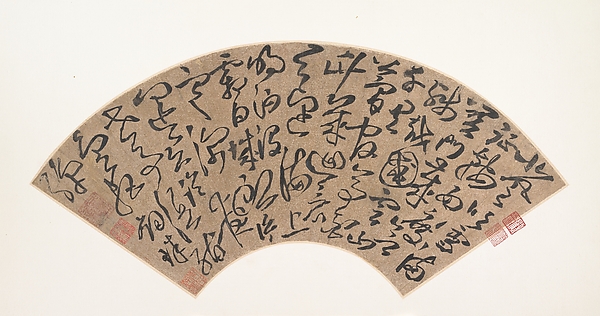
The Poem Before Paraphrase
This block uses Mountain Stones, Han Yu, 山石 as the anchor, with "山石犖确行徑微,黃昏到寺蝙蝠飛。升堂坐階新雨足,芭蕉葉大支子..." kept in front of the explanation.
Full Poem Scope: The page uses the whole poem because Han Yu's argument emerges through sequence. Rugged path, temple lodging, food, night, dawn, mist, stream crossing, and final reflection all matter. A short landscape excerpt would miss how physical travel becomes a statement about freedom from constraint.
Rugged Path: Shan shi luo que xing jing wei starts with difficulty. The stones are rugged, and the path is faint. The poem does not open with a comfortable scenic view. It starts with uncertain movement, which makes the later joy feel earned rather than decorative.
Temple At Dusk: The speaker reaches a temple at dusk while bats fly. This creates an atmosphere of remoteness and transition. The temple is not introduced as a tourist sight. It is a place reached after a hard path, just as light is leaving the mountains.
Firelit Wall Paintings: The monk says the old wall's Buddhist paintings are good and brings fire so they can be seen. This small action matters: culture is not displayed under perfect light. It has to be found, lit, and partially seen in an old mountain temple.
Images, Sound, And Emotional Turn
Rough Food: The bedding, brushed mat, soup, rice, and coarse grain give the poem hospitality without luxury. Shu li, coarse grain, is enough to fill hunger. The page keeps this plainness because it prepares for the later claim that this life can be joyful.
Night And Moon: At night the insects cease, and clear moonlight comes over the ridge into the door. The scene becomes quiet after the earlier movement. The poem gives rest, but it is not empty rest. The moon physically enters the lodging, turning the doorway into part of the mountain world.
No Road At Dawn: At dawn the speaker leaves alone with no clear road, moving up and down through mist. The absence of a road is not only danger. It also opens the poem into wandering. The path is no longer a fixed social route.
Bare Feet In The Stream: The barefoot crossing is one of the poem's strongest bodily moments. The speaker steps on stream stones while water sounds sharply and wind blows his clothes. The joy at the end depends on this physical contact with landscape, not on an abstract idea of nature.
Keep the term set visible here: luo que, fo hua, qing yue. The reading changes if one of these terms is translated too smoothly.
Translation Choices To Keep Visible
Freedom From The Bridle: Qi bi ju shu wei ren ji asks why one must be confined as another person's bridled horse. The image makes the poem more than travel writing. Mountain movement becomes a contrast with social constraint. The final wish to return with companions keeps that moral pressure open.
Han Yu's mountain stones Reading Payoff: This page differs from River Snow because Han Yu's mountain world is full of movement, lodging, food, moonlight, color, and bodily crossing, not near-total absence. It differs from Zhang Ji's night mooring because the speaker moves through a mountain route rather than remaining in a passenger boat. The article gives readers a source-based way to see why the final freedom claim grows from concrete travel details.
The reading should end in one practical move: Compare this page with Liu Zongyuan's River Snow and Zhang Ji's Night Mooring before treating Tang landscape poems as a single scenic mode.