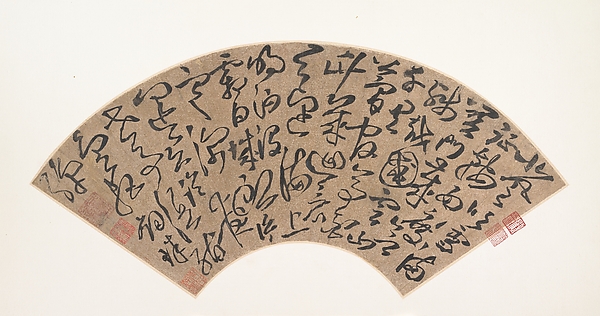
The Poem Before Paraphrase
This block uses White Snow Song Sending Judge Wu Back to the Capital, Cen Shen, 白雪歌送武判官歸京 as the anchor, with "北風捲地白草折,胡天八月即飛雪。忽如一夜春風來,千樹萬樹梨花..." kept in front of the explanation.
Full Poem Scope: The page uses the whole poem because the pear-blossom couplet is only one movement. The poem travels from weather shock to interior cold, military discomfort, desert ice, farewell wine, frontier instruments, frozen flag, Luntai departure, and horse tracks in snow. A short quotation loses the farewell structure.
Border Weather: The opening does not begin gently. The north wind rolls across the ground and breaks white grass; in the northern region, snow flies already in the eighth month. Hu tian marks a frontier sky. The poem establishes distance from the settled center before any elegant image appears.
Pear Blossom Image: Hu ru yi ye chun feng lai, qian shu wan shu li hua kai is famous because it turns snow into spring blossoms. But the beauty is startling, not merely pretty. The comparison arrives after violent wind and early snow, so spring appears as imagination inside hardship.
Images, Sound, And Emotional Turn
Cold Indoors: Snow enters bead curtains and wets gauze screens. Fox fur is not warm, and brocade bedding is thin. This section matters because it brings the frontier weather inside the human world. The cold is not only scenic; it defeats luxury materials that should normally protect the body.
Military Hardship: The general cannot control the horn bow, and the protector's iron armor is too cold to put on. These lines make the poem a frontier poem, not a garden snow poem. War equipment becomes difficult under weather pressure, and the body meets cold through military tools.
Farewell At Camp: The headquarters banquet, huqin, pipa, and Qiang flute shift the poem into farewell. The returning guest is honored in a border camp, not a city pavilion. Music and wine do not erase cold; they create ceremony inside it. That contrast gives the departure emotional force.
Keep the term set visible here: Hu tian, li hua, Han hai. The reading changes if one of these terms is translated too smoothly.
Translation Choices To Keep Visible
Frozen Flag: The red flag is pulled by wind but frozen and unable to turn. The image is exact and memorable because it makes motion and stillness collide. A flag should flutter; here it is caught by cold. The farewell world feels suspended at the camp gate.
Horse Tracks Ending: The poem ends after the friend disappears around mountain and road. Nothing remains but horse tracks in snow. This closing image is quieter than the opening wind, but it carries the farewell. The page keeps that final emptiness because it prevents the poem from being only a snow spectacle.
Cen Shen's frontier snow Reading Payoff: This page differs from River Snow because Cen Shen's snow is social, military, and farewell-driven, while River Snow is solitary and nearly emptied of people. It differs from Du Mu's Qingming because the road here leads away through Tianshan snow rather than toward village relief. The article gives readers a source-based way to quote the pear-blossom line without losing the frontier send-off.
The reading should end in one practical move: Compare this page with River Snow and Wang Changling's frontier song before treating frontier poetry as only landscape or only war.