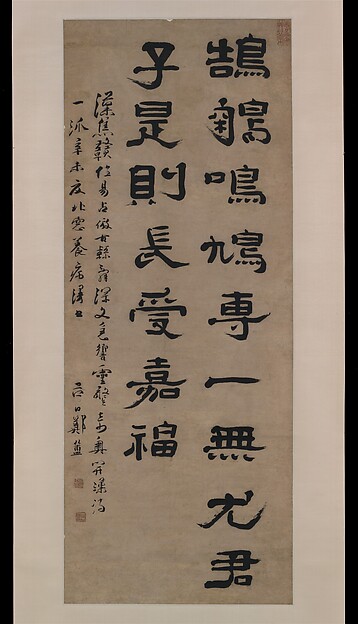
Analects Scene Before The Motto
This block uses Analects, Book 13.23, Zi Lu as the anchor, with "子曰:「君子和而不同,小人同而不和。」" kept in front of the explanation.
Harmony And Sameness: The passage turns on he and tong. He means harmony, fitting relation, or ordered difference. Tong means sameness or mere agreement. The page keeps both terms visible because translating both as agreement would destroy the contrast. The whole line depends on seeing that two people may fit together without becoming identical.
Junzi Contrast: The first half describes the junzi. The cultivated person can harmonize without becoming identical. This is why the line can support respectful disagreement, but only if disagreement still aims at relation rather than self-display.
Small Person Contrast: The second half describes the xiao ren. The petty person can become the same without true harmony. That means surface agreement is not enough. People may echo each other and still fail to create ordered relation or moral clarity.
Respectful Disagreement: Respectful disagreement is a modern label for one use of the passage. The classical wording does not say disagree loudly. It says do not confuse harmony with sameness. The page therefore reads disagreement through the goal of he. Difference has value here only when it can still participate in ordered relation.
Conduct, Role, And Key Terms
Not Individualism: A shallow modern reading can make the line sound like pure individualism. That misses harmony. The junzi does not simply insist on being different. He can join, fit, and respond without losing judgment. The line protects judgment, but it also asks judgment to stay relational.
Not Conformity: The opposite shallow reading makes harmony mean avoiding difference. The second half blocks that. Mere sameness can fail to harmonize. The page keeps this limit so the quotation does not become pressure to agree for the sake of smoothness. This is why the xiao ren clause is not optional; it exposes the weakness of agreement without real fit.
Analects Respectful Disagreement Citation Limit: A careful citation should include both halves of the contrast. Quoting only he er bu tong can sound pleasant but incomplete. The xiao ren clause shows why sameness is not the same as harmony and why surface agreement can be morally weak.
Analects Respectful Disagreement Reading Payoff: This page differs from the ritual page because the problem is not ritual measure, but the difference between harmony and sameness. It differs from the names page because the issue is interpersonal and moral contrast rather than public role language. The article gives readers a source-safe explanation for using the line in disagreement, consensus, and pluralism contexts.
Keep the term set visible here: junzi, he, tong. The reading changes if one of these terms is translated too smoothly.
How To Cite The Saying
Analects Respectful Disagreement Source Checkpoint: Keep the speaker, respondent, and Analects book number in view: Analects, Book 13.23, Zi Lu, opening with "子曰:「君子和而不同,小人同而不和。」". Keep junzi beside the Chinese wording before accepting the readable English. On this page the source anchor is doing real work: it tells the reader where the claim begins, which phrase is being interpreted, and why the explanation should stay narrower than a later proverb or author label.
Analects Respectful Disagreement Reader Decision: The practical decision is whether the reader can test whether the English still preserves conduct, relation, and role. Compare junzi with he, then ask which English phrase compresses the most. That check blocks the common mistake of flattening Confucius into a one-sentence ethics poster; it also gives the page a finish line, so the reader leaves with a source habit rather than a smoother slogan.
The reading should end in one practical move: Compare this page with ritual as practice before treating harmony as either politeness or conformity.