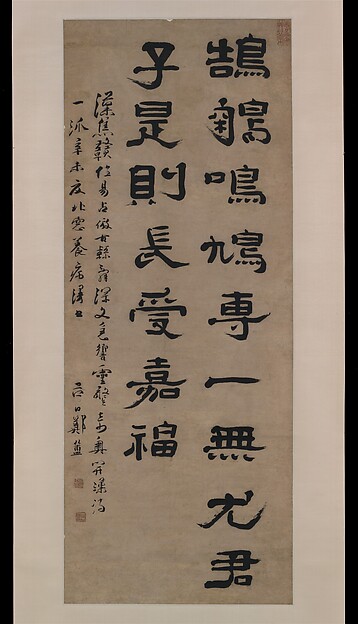
Analects Scene Before The Motto
This block uses Analects, Book 1.2, Xue Er as the anchor, with "有子曰:「其為人也孝弟,而好犯上者,鮮矣;不好犯上,而好作亂..." kept in front of the explanation.
Speaker And Setting: The line is spoken by You Zi in the opening book of the Analects. The source note matters because many online pages turn every sentence into a direct Confucius quote. This page keeps the Analects speaker visible while still treating the passage as part of the Confucian tradition.
Filial And Fraternal: Xiao points toward filial respect; di points toward respect for elder siblings or fraternal order. The page keeps both because the passage is not only about parent-child feeling. It describes a small social pattern in which deference, relation, and moral formation begin.
Offending Above: The first sentence links filial and fraternal conduct to not liking to offend those above. This can sound politically conservative if isolated. The page reads it as part of the passage's root logic: early relational discipline is supposed to reduce disorder, not excuse blind obedience.
Making Disorder: The second sentence intensifies the point: someone who does not like offending above yet likes making disorder has not existed. The claim is rhetorical and moral. It draws a line from family conduct to public order, which readers should cite carefully rather than casually universalize.
Conduct, Role, And Key Terms
Working At The Root: Jun zi wu ben is the page's central phrase. The gentleman works at the root. Ben is not merely origin; it is what must be established before the way can grow. The page keeps this root language because it explains why filial respect appears before ren in the passage.
Root Of Ren: Xiao di ye zhe, qi wei ren zhi ben yu says filial and fraternal conduct are perhaps the root of ren. The final yu softens the assertion. This is not a claim that family loyalty equals humaneness. It says one early root of ren is practiced in close relations.
Analects Filial Respect Citation Limit: A careful citation should avoid turning the passage into either simple family obedience or a complete theory of ren. It is an opening-book statement about roots, conduct, and the social training of humaneness. That boundary keeps the English explanation honest.
Analects Filial Respect Reading Payoff: This page gives filial-respect readers the full Analects 1.2 structure: xiao, di, order, root, way, and ren. It differs from the ren page because it explains a root of humaneness in close relations, while Analects 6.30 explains extension through standing and reaching with others. That distinction keeps the article from turning filial respect into either mere obedience or the entire Confucian project.
Keep the term set visible here: xiao, di, ben. The reading changes if one of these terms is translated too smoothly.
How To Cite The Saying
Analects Filial Respect Source Checkpoint: Keep the speaker, respondent, and Analects book number in view: Analects, Book 1.2, Xue Er, opening with "有子曰:「其為人也孝弟,而好犯上者,鮮矣;不好犯上,而好...". Keep xiao beside the Chinese wording before accepting the readable English. On this page the source anchor is doing real work: it tells the reader where the claim begins, which phrase is being interpreted, and why the explanation should stay narrower than a later proverb or author label.
Analects Filial Respect Reader Decision: The practical decision is whether the reader can test whether the English still preserves conduct, relation, and role. Compare xiao with di, then ask which English phrase compresses the most. That check blocks the common mistake of flattening Confucius into a one-sentence ethics poster; it also gives the page a finish line, so the reader leaves with a source habit rather than a smoother slogan.
The reading should end in one practical move: Compare this page with the ren page before claiming that filial respect is the whole meaning of humaneness.