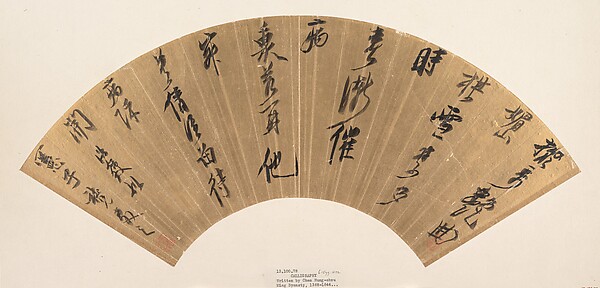
Analects Scene Before The Motto
This block uses Analects, Book 4.15, Li Ren as the anchor, with "子曰:「參乎!吾道一以貫之。」曾子曰:「唯。」子出,門人問曰..." kept in front of the explanation.
One Thread: Wu dao yi yi guan zhi is the difficult opening. Confucius does not list many rules. He says his way is pierced through or threaded by one thing. The image asks readers to look for coherence across conduct, learning, and relation rather than a loose collection of sayings. That is why the page does not start with a detached quote card. The reader first has to see that zhong and shu are offered as an answer to unity, not as two decorative virtues.
Zengzi Explains: The explanation is given by Zengzi after Confucius has gone out. That narrative detail matters. The page should not pretend the two-word formula is a direct glossary from Confucius himself. It is a disciple's authoritative explanation inside the Analects scene.
Zhong: Zhong can be translated as loyalty, doing one's utmost, or wholeheartedness. In this passage it should not mean blind political obedience. It points to the sincerity and full commitment with which a person carries a relation or responsibility.
Shu: Shu is often explained through reciprocity or putting oneself in another's place. It is not merely politeness. It gives outward direction to zhong, so wholehearted conduct does not become self-absorbed intensity.
Conduct, Role, And Key Terms
Together, Not Separate: Zhong without shu can become severe loyalty without regard for others. Shu without zhong can become soft sympathy without commitment. Zengzi's pairing is powerful because it joins inner wholeheartedness with relational consideration. The pair also guards against a common mistranslation problem: loyalty can sound vertical and obedience-based, while reciprocity can sound merely transactional. In the Analects setting, both terms are thicker than those modern shortcuts.
Not A Slogan: A shallow quote page might say Confucius taught loyalty and reciprocity and stop there. Analects 4.15 is more interesting. It stages a question about the unity of the Master's way and then gives a compressed answer that still needs interpretation.
Analects Loyalty And Reciprocity Citation Limit: A careful citation should mention Zengzi's role and the one-thread line. If only loyalty and reciprocity are quoted, readers may miss that the terms summarize a broader way. The passage is strongest when the narrative frame remains visible. For essays, it is also worth noting that the explanatory voice is Zengzi's; the Analects preserves the scene as interpretation by a disciple, not as a dictionary entry.
Analects Loyalty And Reciprocity Reading Payoff: This page differs from trustworthy speech because the focus is not only reliability in words. It differs from daily reflection because zhong and shu are presented as a larger thread through the Master's way. The article gives readers a source-safe path from a famous pair of terms back to the Analects scene that explains them.
Keep the term set visible here: zhong, shu, yi yi guan zhi. The reading changes if one of these terms is translated too smoothly.
The reading should end in one practical move: Compare this page with daily reflection before using zhong and shu as a simple virtue pair.