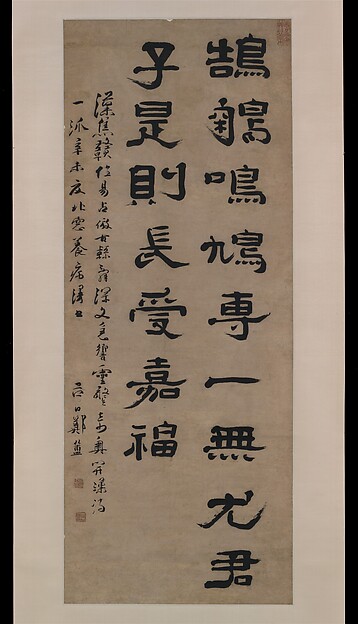
Analects Scene Before The Motto
This block uses Analects, Book 7.22, Shu Er as the anchor, with "子曰:「三人行,必有我師焉。擇其善者而從之,其不善者而改之。..." kept in front of the explanation.
Three People Walking: San ren xing gives the scene. The number is small and ordinary: three people walking together. The page keeps the everyday scale because the passage says learning can happen in common company, not only in formal classrooms.
A Teacher Among Them: Bi you wo shi yan says there must be a teacher for me among them. This is not flattery. It means a learner can find instruction in the conduct, words, strength, or failure of people nearby. The teacher is not necessarily a formal master. The passage lowers the setting of learning, but it does not lower the standard of judgment. Ordinary company becomes useful because the learner is awake to difference.
Choosing The Good: Ze qi shan zhe er cong zhi names the positive method: choose what is good and follow it. Learning from others is not passive imitation. The learner judges, selects, and then practices what is worth following.
Changing The Not Good: Qi bu shan zhe er gai zhi names the second half. What is not good is not merely condemned. It becomes a mirror for change in oneself. This gives the passage its self-correcting force. The grammar matters: the learner does not only judge another person and move on. The not-good example returns to the self as a prompt for reform, which is why the quote belongs with self-cultivation rather than social comparison alone.
Conduct, Role, And Key Terms
Not Everyone Is Equally Right: A shallow reading says everyone is your teacher and stops there. The Analects wording is sharper. Other people teach through both good and not-good examples, but the learner must distinguish and respond differently.
Learning As Selection: The passage makes learning selective. It asks for attention, judgment, and change. This protects the page from turning the quote into vague openness. The point is not to absorb everything, but to learn through clear comparison.
Analects Learning From Others Citation Limit: A careful citation should include the choosing and changing clauses. Quoting only three people walking can make the line sound charming but incomplete. The method appears only when following good and correcting not-good remain visible. In practical use, the quote should not mean that every opinion deserves equal acceptance. It means every encounter can become material for disciplined selection and correction.
Analects Learning From Others Reading Payoff: This page differs from humility in study because it focuses on learning from nearby examples rather than asking across status. It differs from teaching without weariness because the learner is the active observer. The article gives readers a source-safe explanation of learning from others without flattening the quote into universal praise.
Keep the term set visible here: san ren xing, shi, shan. The reading changes if one of these terms is translated too smoothly.
How To Cite The Saying
Analects Learning From Others Source Checkpoint: Keep the speaker, respondent, and Analects book number in view: Analects, Book 7.22, Shu Er, opening with "子曰:「三人行,必有我師焉。擇其善者而從之,其不善者而改...". Keep san ren xing beside the Chinese wording before accepting the readable English. On this page the source anchor is doing real work: it tells the reader where the claim begins, which phrase is being interpreted, and why the explanation should stay narrower than a later proverb or author label.
Analects Learning From Others Reader Decision: The practical decision is whether the reader can test whether the English still preserves conduct, relation, and role. Compare san ren xing with shi, then ask which English phrase compresses the most. That check blocks the common mistake of flattening Confucius into a one-sentence ethics poster; it also gives the page a finish line, so the reader leaves with a source habit rather than a smoother slogan.
The reading should end in one practical move: Compare this page with humility in study before using the quote as generic openness advice.