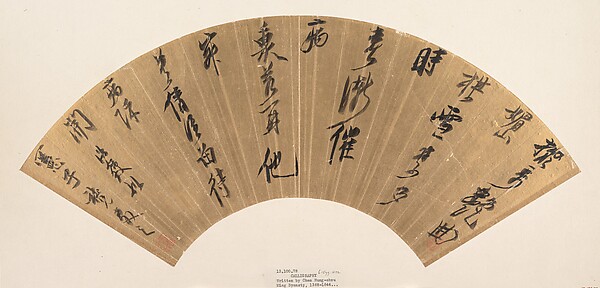
Analects Scene Before The Motto
This block uses Analects, Book 2.24, Wei Zheng as the anchor, with "子曰:「非其鬼而祭之,諂也。見義不為,無勇也。」" kept in front of the explanation.
Two-Part Passage: The passage has two short judgments. The first criticizes sacrificing to spirits that are not one's own as flattery. The second defines failure to act on rightness as lack of courage. Reading both lines together keeps courage from becoming reckless action. The shared issue is misalignment: ritual can be aimed at the wrong object, and moral insight can fail to become conduct. That pairing makes the courage line more exact than a motivational quote.
Improper Sacrifice: Fei qi gui er ji zhi describes ritual action aimed at the wrong object. The problem is not energy or sincerity alone. An act can be active and still morally misplaced. That opening prepares the courage line by asking whether action fits what is right.
Seeing Rightness: Jian yi means seeing rightness or recognizing what is appropriate. The page keeps seeing in the explanation because the line begins with judgment. Courage is demanded only after the moral shape of the situation has become visible.
Not Doing It: Bu wei is the failure to act. The passage is not about ignorance; it is about inaction after recognition. This distinction matters for readers who want a courage quote. The courage failure comes after one already sees what should be done.
Conduct, Role, And Key Terms
No Courage: Wu yong ye names the deficiency: no courage. Yong is not separated from yi. The page therefore avoids defining courage as temperament, aggression, or confidence. It is the capacity to enact a recognized right course.
Judgment Before Boldness: This is why the page title says courage with judgment. The passage does not praise any difficult action. It praises action that follows rightness. A person who acts boldly in the wrong ritual or moral direction is not the model here. In classroom or essay use, this distinction matters: the quote can support responsible action after recognition, but it should not be used to sanctify speed, stubbornness, or public toughness.
Analects Courage With Judgment Citation Limit: A careful citation should not detach the courage line from yi. Quoting only no courage can make the saying sound like pressure to act. The full line says to see rightness and not act is the failure, so judgment remains the condition. If the situation is still unclear, the passage does not give permission to pretend that rightness has already been seen.
Analects Courage With Judgment Reading Payoff: This page differs from the poverty-and-integrity page because yi appears here as a call to action rather than as a boundary against unjust gain. It differs from the self-cultivation page because the test is a concrete moment of recognized obligation. The article gives readers a source-safe courage quote without turning courage into impulse.
Keep the term set visible here: yi, yong, jian. The reading changes if one of these terms is translated too smoothly.
The reading should end in one practical move: Compare this page with poverty and integrity before using courage as a generic action slogan.